The Karpeles Grand: A Springfield Landmark
Long before the first bouquet was ever carried down its aisle, the building at 101 West 1st Street in Jacksonville’s Springfield neighborhood was already telling a story. Today it operates as Karpeles Grand, a historic event venue built for weddings, performances, fashion shows, and celebrations of every kind. But its walls have held a century of Jacksonville history, and understanding that history is part of what makes hosting an event here feel different from booking a generic ballroom.
A Neighborhood Built to Last
To understand the building, it helps to understand Springfield itself. Established in 1869, Springfield sits just north of downtown Jacksonville, bordered by Hogan’s Creek to the south and railroad lines to the north and east. It was one of the first neighborhoods to develop outside the original downtown core, and its growth accelerated after a pivotal moment in the city’s history: the Great Fire of 1901, which destroyed much of downtown Jacksonville. Hogan’s Creek acted as a natural firebreak, sparing Springfield from the flames, and in the years that followed, many downtown residents who had lost their homes rebuilt across the creek instead.
That timing shaped everything about the neighborhood’s architecture. Springfield’s growth peaked from the early 1880s through the 1920s, resulting in one of the largest and best-preserved collections of late 19th- and early 20th-century architecture in Florida. The Springfield Historic District now includes roughly 1,800 contributing structures across 119 city blocks, and it was officially added to the National Register of Historic Places in 1987. In 2010, Southern Living magazine named it the top “comeback” neighborhood in the South, recognizing decades of restoration work by residents and preservation groups like the Springfield Preservation and Revitalization Council.
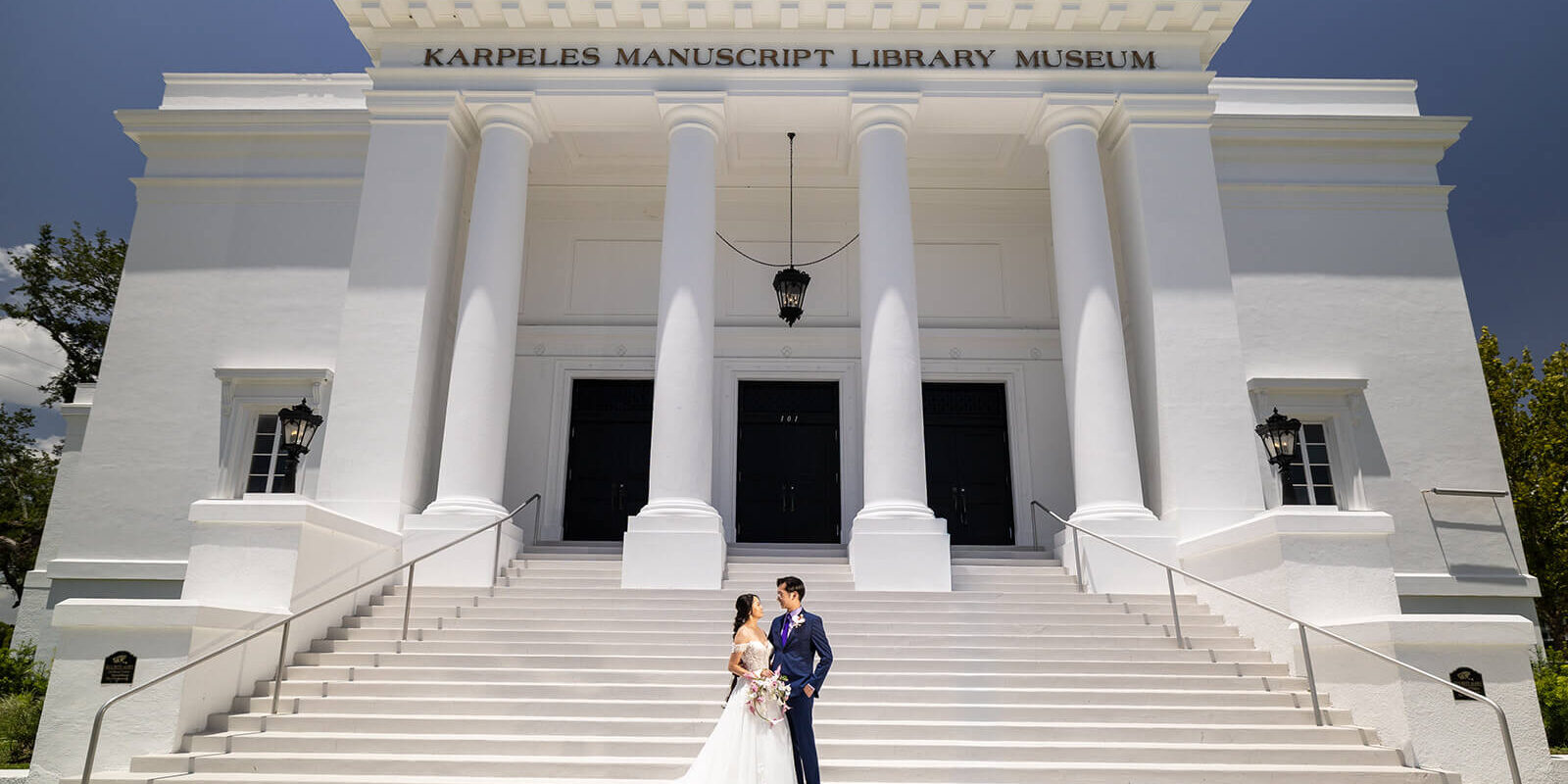
The building that would eventually become Karpeles Grand rose during the tail end of that boom, in 1921, and it has stood at what many consider the entrance to the neighborhood ever since.

From Church to Landmark
The building was constructed in 1921 as the home of the First Church of Christ, Scientist. It was designed by the architectural firm Marsh and Saxelbye and built by W.D. Gerbrich in the Classical Revival style, a design language defined by symmetry, formal proportions, and grand columned facades meant to project permanence and dignity. Those same Doric columns and soaring ceilings that once welcomed a congregation are what now frame wedding ceremonies and receptions in the venue’s Grand Ballroom.
The building’s architectural significance was formally recognized in 1986, when it was designated a contributing property within the Springfield Historic District. That designation reflects more than age. It means the structure is considered an important part of the physical fabric that tells Springfield’s story, alongside the district’s many restored homes and civic buildings.
The congregation used the building for decades before eventually outgrowing or relocating from it, and in 1992 it was sold to David Karpeles, a mathematician, real estate investor, and collector who had spent years amassing one of the largest private collections of historical manuscripts and documents in the world.
The Manuscript Museum Years
For thirty years, the building operated as the Karpeles Manuscript Library Museum, one of more than a dozen Karpeles museums located in repurposed historic buildings across the country. The Jacksonville location displayed rotating exhibits drawn from a collection that, at its peak, included more than a million documents spanning centuries of history. Visitors who walked through the space over the years could view items connected to figures like Albert Einstein, Abraham Lincoln, and Thomas Jefferson, alongside pieces of Florida and Jacksonville history.
The museum kept much of the building’s original character intact. Stained glass windows remained in place, along with the elevated seating and altar area that hinted at the space’s origins as a sanctuary. It was a quiet, contemplative use for a building with commanding architecture, and it meant the structure avoided the kind of alteration that often comes with adaptive reuse.
David Karpeles passed away in 2022, and the following year his family made the decision to consolidate the museum network, closing several branch locations, including Jacksonville, after thirty years of operation. The closure marked the end of one chapter for the building, but not its final one.

A New Purpose for a Historic Space
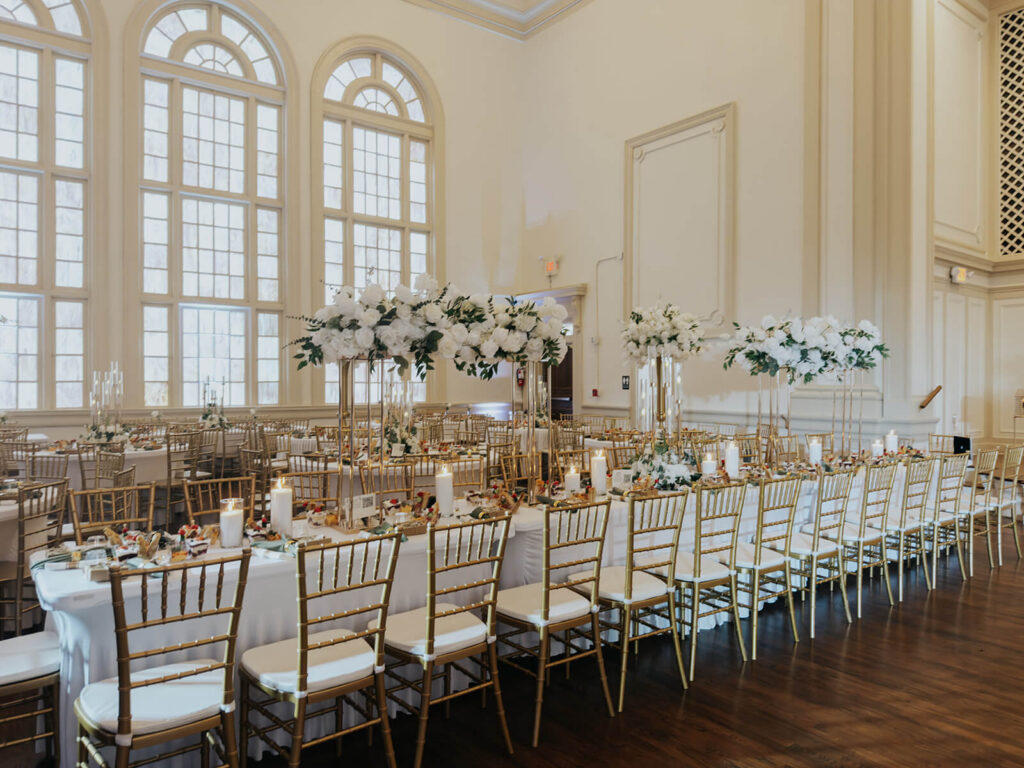
Later in 2023, new owners acquired the building and set about restoring it for a new role as an event venue. That restoration preserved the architectural elements that had defined the space for a century: the original chandeliers, the tall windows, the columned facade, and the sense of scale that a 1921 sanctuary naturally carries. What changed was the purpose. Instead of housing static exhibits behind glass, the building now hosts weddings, corporate events, fashion shows, and live performances, filling the same soaring rooms with music, dancing, and celebration.
Karpeles Grand today includes several distinct spaces within the building and its grounds, from the Grand Ballroom, with its original chandeliers and capacity for up to 350 seated guests, to the Venetian-inspired lawn and gardens outside, the 1,500-square-foot Grand Foyer, and private suites for couples preparing for their ceremony. Each space carries forward a piece of the building’s layered past while functioning as a modern venue built for celebration.

Why the History Matters to Couples and Guests
For anyone planning an event, a venue’s backstory can shape the entire experience. A century-old building that has served as a church, a museum for irreplaceable historical documents, and now a gathering place for some of life’s biggest milestones offers something a newly built ballroom simply cannot: a sense of continuity. Guests walking under those original chandeliers or past the Doric columns are standing in a space that has quietly witnessed Jacksonville’s history unfold since 1921.
That history is also woven into the surrounding neighborhood. A wedding or event at Karpeles Grand isn’t just set inside a historic building; it is set inside one of Florida’s most storied historic districts, minutes from downtown Jacksonville and surrounded by more than a century of preserved architecture. For couples and event planners looking for a venue with genuine character rather than a generic backdrop, that combination of building and neighborhood is hard to replicate.
From a Classical Revival church to a manuscript museum to a modern event space, the building at 101 West 1st Street has reinvented itself more than once while staying true to what made it remarkable in the first place. Karpeles Grand is simply its latest, and perhaps most celebratory, chapter.